
Business · McDonald's expansion architect
Ray Kroc Saw a System Where Other Salesmen Saw a Customer
He did not invent McDonald's. He recognized that its operating system could become a national business.
How did Ray Kroc succeed?
Ray Kroc succeeded by recognizing the scalability of the McDonald brothers' restaurant and organizing the infrastructure around it. Drawing on decades in sales, he recruited committed franchisees, enforced consistent standards, developed supplier relationships, and embraced a real-estate model that strengthened corporate finances and control. His achievement was replication, not inventing fast food.
The story
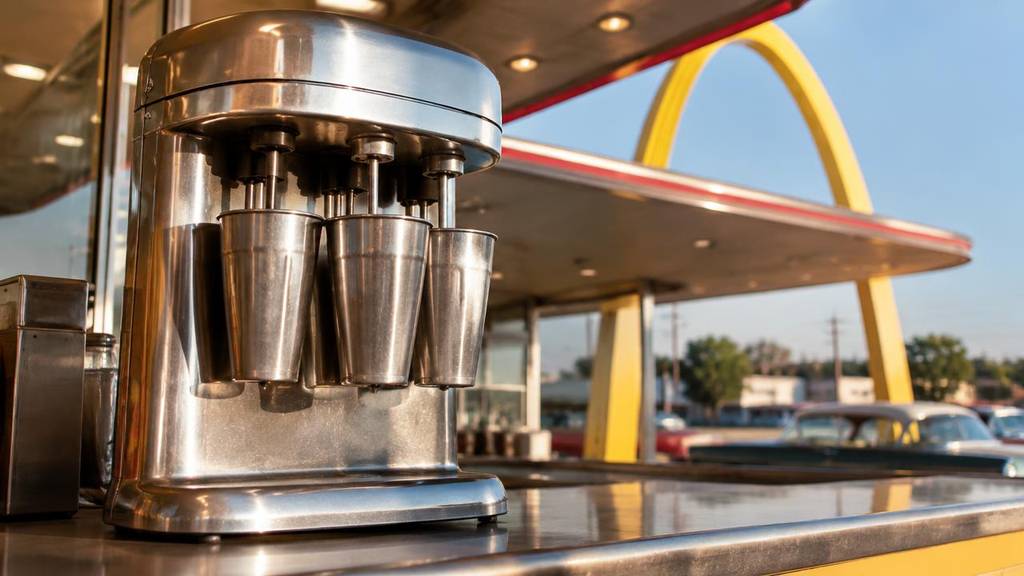
In 1954, Ray Kroc was a salesman in his fifties investigating an unusually promising customer. A hamburger restaurant in San Bernardino, California, had ordered multiple Multimixers, the milkshake machines he distributed. The volume suggested a place worth visiting. What he found was Richard and Maurice McDonald's tightly organized restaurant: a short menu, rapid preparation, disposable packaging, and customers arriving in numbers that made the equipment order understandable. Kroc's opportunity began with curiosity about a sales signal. Instead of merely congratulating a good account, he examined the machinery of demand behind it.
Kroc had not come through business school. Born in Oak Park, Illinois, in 1902, he left high school and accumulated experience in music, paper-cup selling, and equipment distribution. Those jobs taught him to approach strangers, explain a product, and endure refusal. They also put him inside restaurants long before he controlled a chain. He could compare the McDonald brothers' operation with the slower, more complicated establishments he already knew. His late breakthrough depended partly on the uncelebrated decades that made an exceptional operating model recognizable when he finally encountered one.
The brothers had developed their Speedee Service System in 1948 and had already pursued franchising before Kroc arrived. That distinction matters: he did not create the original restaurant or its essential production logic. He negotiated the right to expand the concept and opened his Des Plaines, Illinois, restaurant on April 15, 1955. It served as a demonstration of what the system could become beyond California. The challenge was not simply selling more franchise agreements. It was reproducing the customer experience when the founders were thousands of miles from the grill.
Kroc insisted on consistent food, clean premises, and operators who would follow the system. Franchising could generate quick cash by selling broad territorial rights, but uncontrolled expansion risked producing restaurants that shared a sign and little else. His preference for engaged individual operators helped align local effort with national standards. Supplier relationships mattered just as much. A chain could promise uniformity only if potatoes, buns, meat, equipment, and preparation procedures worked together. The product was a hamburger; the harder invention was dependable coordination among independently owned businesses.
The original franchise economics were thin. Financial executive Harry Sonneborn helped develop a real-estate structure through the Franchise Realty Corporation, established in 1956. Leasing or controlling restaurant sites and subleasing them to franchisees created revenue beyond the small service fees available under the early arrangement. It also strengthened leverage over operators. Calling McDonald's merely a property company misses the point, however. Real estate worked because profitable restaurants needed the locations. The financial structure and the operating system reinforced each other; neither was a substitute for customers wanting the meal.
In 1961, Kroc bought the brothers' interests for $2.7 million. That year also brought the establishment of Hamburger University, formalizing the training required to reproduce the business. The company went public in 1965. Kroc's expansion generated enormous value, but his relationship with the brothers also became a lasting source of controversy and competing recollections. A responsible account separates documented agreements from dramatic retellings. His determination was commercially potent; it did not erase the brothers' authorship or make every struggle over ownership a model worth imitating.
Kroc's career offers a particularly useful correction to founder mythology. The decisive insight need not be a new product, and it need not arrive in youth. Sometimes the opportunity lies in taking an existing excellence seriously enough to build training, finance, purchasing, and accountability around it. His self-taught competence was strongest in selling and organizing; specialists such as Sonneborn supplied capabilities he lacked. The repeatable lesson is to inspect unusual customer behavior, identify what makes one operation exceptional, and prove that those conditions can survive replication before celebrating the number of locations.
The Cheat Code: shortcuts that worked
1. Cheat Code: Investigate the Abnormal Order
An unusually large mixer order led Kroc to San Bernardino. Review customers whose purchases exceed the norm and determine what their workflow reveals about a larger market.
2. Cheat Code: Replicate the Kitchen Before the Logo
McDonald's consistency came from operating procedures, not signage. Prove that a second team can reproduce preparation, timing, and cleanliness before expanding the brand.
3. Cheat Code: Make Local Ownership Hands-On
Kroc valued franchisees invested in daily execution. When partnering with operators, assess their willingness to manage the actual service rather than merely purchase a territory.
4. Cheat Code: Finance the Site and the System Together
Sonneborn's property structure supported expansion and accountability. Examine whether control of a critical operating asset can improve both revenue durability and quality enforcement.
Your plan to do the same
- Identify one unusually productive customer and observe its operation in person.
- Separate the customer's original inventions from the capabilities you could add.
- Write down the exact workflow behind speed, consistency, and low waste.
- Open one replication site before offering broad expansion rights.
- Model franchise income, site costs, and operator profitability separately.
- Create a training and inspection program before increasing the number of operators.
Frequently asked questions
Did Ray Kroc found the original McDonald's?
No. Richard and Maurice McDonald created the original business and developed its Speedee Service System. Kroc became their franchising agent in 1954, opened his Illinois restaurant in 1955, and bought their interests in 1961. His historical contribution was building the organization that expanded the concept nationally and internationally.
How old was Ray Kroc when he discovered McDonald's?
Kroc was fifty-one when he visited the brothers' San Bernardino restaurant in 1954; he turned fifty-two that October. He was already an experienced salesman distributing milkshake equipment. The visit became a turning point because he saw that the restaurant's unusually high sales reflected a system that might be replicated.
Why was real estate important to Ray Kroc's success?
The early franchise agreement left limited corporate income from restaurant sales. Harry Sonneborn helped create a structure in which the company controlled sites and collected rent from franchisees. That provided another income stream and greater influence over operators, while still depending on restaurants attractive enough to support their occupancy costs.