
Business · Steel industrialist and philanthropist
Andrew Carnegie Turned Workplace Learning into an Industrial Empire
He learned to read signals, cultivate sponsors, and track costs—then applied those habits to an industry hungry for scale.
How did Andrew Carnegie succeed?
Andrew Carnegie succeeded by using early jobs to acquire information, influential relationships, and operating responsibility. He moved from telegraphy into railroad management, invested beyond his salary, and concentrated on steel as demand expanded. Modern equipment, detailed cost accounting, reinvestment, and capable managers helped his companies produce at increasingly competitive costs.
The story
Andrew Carnegie arrived in the United States in 1848, a twelve-year-old immigrant from Dunfermline, Scotland. His family settled in Allegheny, Pennsylvania, across the river from Pittsburgh, and he became a bobbin boy in a cotton factory. The work was long and poorly paid. There was no university waiting at the end of the shift. His alternatives were the institutions around him: workplaces, other workers, newspapers, and books. Access to the private library that Colonel James Anderson opened to working boys helped make reading a lasting part of his education.
A messenger job with the Pittsburgh telegraph office gave Carnegie something the mill could not: movement through the city's commercial network. He learned business addresses, recognized important names, and developed telegraph skills, including the ability to interpret messages by sound. Information arrived at the office before it reached much of the wider economy. Carnegie's advancement was therefore more than a reward for working hard. He had moved into a position where speed, reliability, memory, and awareness of other people's business became visible to influential employers.
In 1853, Thomas A. Scott of the Pennsylvania Railroad hired Carnegie as a telegraph operator and secretary. Scott became a powerful sponsor, and Carnegie progressed into railroad management, becoming superintendent of the western division in 1859. Railroads were an education in complex systems: schedules, capital investment, accidents, maintenance, and coordination over distance. They also revealed where demand would accumulate. Carnegie saw the commercial importance of bridges, rails, sleeping cars, and dependable materials through actual operating responsibilities rather than through a detached survey of promising industries.
His first investments demonstrated how wages could become ownership income. With encouragement from Scott, he invested in Adams Express; later interests included sleeping cars, bridges, and oil. These opportunities depended heavily on relationships and access that ordinary workers did not enjoy. Carnegie left the railroad in 1865 to concentrate on his businesses. The shift was decisive: he was no longer primarily selling his labor. He was allocating capital among enterprises linked to an expanding industrial economy, using knowledge and contacts acquired while working inside one of its central networks.
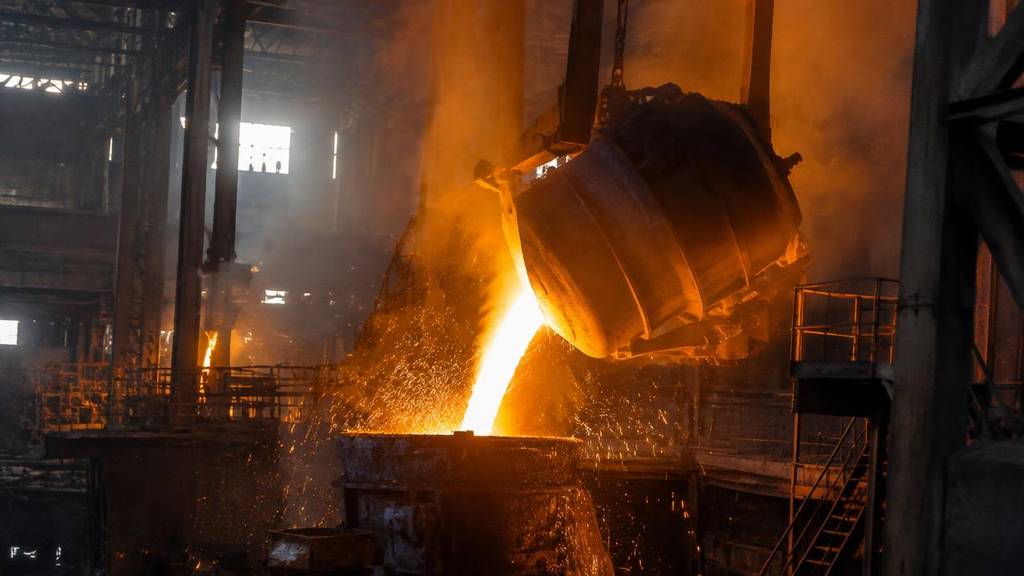
Steel became the focus as the Bessemer process and related advances changed production economics. Carnegie's Edgar Thomson works began production in 1875, supplying steel rails to a rapidly growing railroad market. He pushed for modern equipment and close attention to costs, working with accomplished managers and partners rather than personally mastering every technical process. Detailed accounting helped distinguish genuine efficiency from optimistic impressions. Reinvesting earnings in improved plants could lower costs further, allowing the business to compete aggressively while older, less efficient producers struggled with their existing equipment.
That system produced immense wealth, but the labor behind it cannot be treated as a neutral input. The Homestead conflict of 1892, while Carnegie was abroad and Henry Clay Frick directed the confrontation, became one of the most notorious episodes in American industrial relations. A battle involving locked-out workers and Pinkerton agents left multiple people dead; the union was ultimately defeated. Carnegie's responsibility as the controlling owner remains central to assessing his career. Lower costs and managerial power were achieved within relationships that could be coercive, unequal, and violently contested.
In 1901, Carnegie sold his steel interests to the group led by J. P. Morgan that formed United States Steel. He then devoted much of his remaining life to philanthropy, supporting libraries, education, peace initiatives, and other institutions. His 1889 essay commonly known as The Gospel of Wealth had argued that large fortunes carried public obligations. The trajectory is remarkable without becoming a morality play: a self-educated immigrant used workplace knowledge, sponsorship, ownership, and reinvestment to build industrial power. His generosity and the harms connected to that power both belong in the same account.
The Cheat Code: shortcuts that worked
1. Cheat Code: Work Where Information Arrives Early
Telegraphy and railroads exposed Carnegie to commercial decisions in motion. Seek roles that reveal orders, delays, capacity constraints, or investment plans before they become obvious elsewhere.
2. Cheat Code: Turn a Sponsor into an Apprenticeship
Thomas Scott offered access and increasing responsibility. Find a manager whose decisions you can study, then earn assignments that expose the economics behind the daily work.
3. Cheat Code: Know the Cost of Each Ton
Carnegie's managers used detailed cost information to guide steel production. Track unit costs at a level that reveals which process actually needs improvement.
4. Cheat Code: Reinvest Before the Plant Becomes Obsolete
Modern equipment helped Carnegie challenge older producers. Establish an explicit replacement and upgrade budget instead of treating all current profit as money available for withdrawal.
Your plan to do the same
- Choose a role that exposes how a major industry coordinates work and spends money.
- Build a reading program around the technical and commercial problems you encounter.
- Request responsibility for a measurable operational result under an experienced sponsor.
- Create a unit-cost ledger that separates materials, labor, transport, and downtime.
- Evaluate upgrades by their effect on cost, quality, safety, and employee conditions.
- Reinvest selectively while recording who benefits from growth and who bears its risks.
Frequently asked questions
How did Andrew Carnegie educate himself?
Carnegie learned through reading, telegraph work, and railroad management rather than university study. Colonel James Anderson's library gave working boys access to books, while Thomas Scott provided mentorship and responsibility. Those experiences combined intellectual self-education with unusually valuable exposure to industrial operations, influential people, and investment opportunities.
How did Andrew Carnegie make his fortune?
Carnegie first accumulated investments linked to railroads and industrial expansion, then concentrated on steel. His companies used modern plants, cost accounting, reinvestment, and strong managers to compete at scale. The sale of his steel interests in 1901 converted that industrial ownership into one of the era's largest fortunes.
What was Andrew Carnegie's connection to Homestead?
Carnegie controlled the steel company whose Homestead works became the site of a violent labor conflict in 1892. Henry Clay Frick managed the confrontation while Carnegie was abroad. Carnegie's absence did not remove his responsibility as owner, and the episode remains a major challenge to purely celebratory accounts of his success.